If you’re planning to develop Node JS mobile apps for your next product, it can be difficult to know where Node.js really fits in. Does it run the app screens or just the backend? How does it compare to other stacks?
Node.js remains one of the most widely used web technologies, cited by about 40-50% of developers surveyed In recent Stack Overflow surveys.
WebOsmotic works with teams that ask these questions every day, so let’s learn about Node.js in a clear, practical way.
What is Node JS in the mobile world
typical node js application, Like many others Mobile application technologiesruns on the server. It listens to the requests, talks to the database, and sends the data back to your mobile or web client. For mobile, this usually means:
- iOS and Android apps handle screens and user actions.
- Node.js handles APIs, business rules, and real-time features.
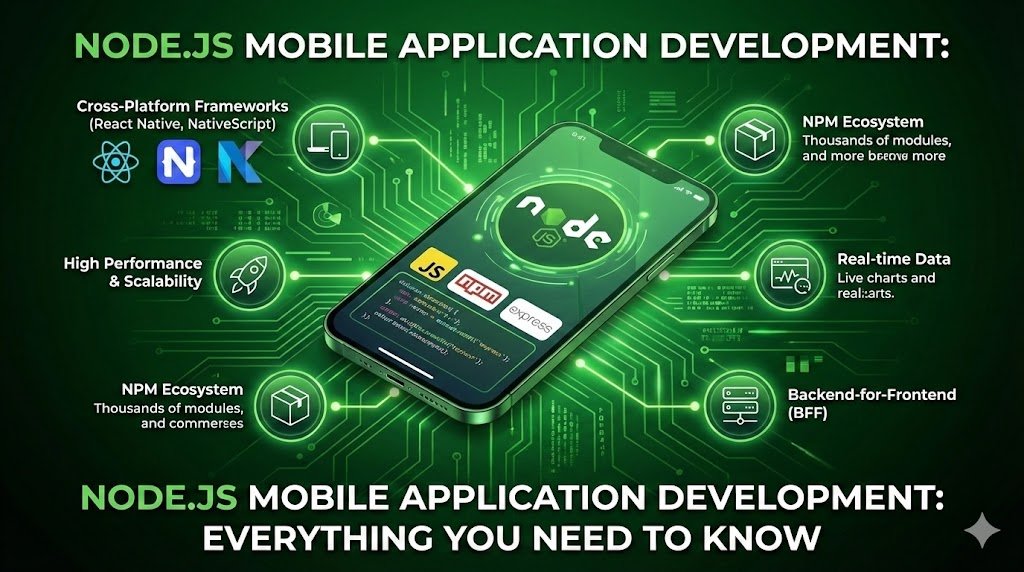
So developing Node JS mobile applications does not mean writing the on-screen UI in Node.js. This means using Node.js as the engine that feeds your mobile application with data and logic. WebOsmotic often designs projects where a clean Node.js backend supports React Native or Flutter applications so teams aren’t duplicating work.
If you want a deeper insight into how Node powers the APIs and real-time features behind mobile products, here’s The guide explains the process It walks through the whole picture
Why do teams choose Node.js for mobile backends?
Node.js has become popular because it is quick to build with JavaScript and use it on the server. This gives some powerful benefits to mobile teams.
Companies like Netflix, Uber, PayPal, LinkedIn, Walmart, and eBay Running major backend systems on Node.js For speed and scalability.
- One language for many layers: Your developers can reuse JavaScript knowledge in the backend and in parts of the frontend. This makes hiring and delivery easier.
- Easier real-time features: Chats, live dashboards, and notifications need fast two-way communication. Node.js handles this pattern of traffic well using tools like WebSockets.
- Good Tool Ecosystem: There are many libraries for authentication, payments and queues. A Node JS application can plug them in instead of writing heavy logic from scratch.
A skilled Node.js app development company like WebOsmotic can choose the right mix of tools so that your backend stays simple and still has room to grow.
Node.js architecture for mobile application development
Node.js powers tens of millions of websites and is used by More than 262,000 companies All over the world.
in Development processit’s useful to decide whether your APIs will run on Node JS mobile app backends or on another stack, based on traffic and real-time needs To understand Node.js mobile app development, think of three simple layers.
- Client Applications: These are iOS, Android, or cross-platform apps. They handle the user interface, navigation, and local storage.
- Node.js backend: This layer exposes REST or GraphQL APIs, performs validation, and runs business rules. It can also handle background functions such as email sending and payment scheduling.
- Database and services: Here you store user data and connect to third-party tools such as payment gateways.
When the three work together, you get a smooth flow of mobile app development for Node JS. Clients stay light, Node.js stays focused on rules and data, and the database stays secure behind that layer. WebOsmotic usually adds logging and monitoring so you can see how each piece behaves in real time.
Example ideas for Node JS Mobile application
It is helpful to visualize a real example of a Node JS mobile application rather than just reading the theory. Here are some simple cases.
- A food delivery app where a mobile client displays menus and maps and a Node.js backend manages orders and driver locations.
- A fitness tracker where the phone collects steps and heart rate and the backend stores the history and sends progress alerts.
- An educational application where users watch lessons on mobile and Node.js handles registration and payments.
These are simple examples of Node JS mobile app development, but they cover many common needs. You see logins, real-time updates, and secure payments. Node.js fits well in every situation because it handles many small requests quickly and can scale with traffic.
When Node.js works best for mobile projects
Node.js isn’t magic, but it shines in some mobile scenarios.
Choose it when:
- Expect a lot of real-time traffic, such as chat or live tracking.
- You want the same backend for your mobile and web service without complex duplication.
- You need to move quickly with a team that already knows JavaScript.
In these cases, Node.js gives you build speed and clarity in architecture. WebOsmotic often combines Node.js with cloud services, so auto-scaling and deployments remain seamless as usage grows.
When you might consider other options
There are also times when Node.js is not a good fit. For heavy data processing or CPU-bound tasks, other languages can perform better. You can still use Node.js on the edge and push intensive tasks to worker services in a different stack.
If your team is deeply invested in another language and has strong mobile experience around that stack, Node.js will just have to go. Trend value Doesn’t help. A good partner like WebOsmotic will look at your current strengths before suggesting a backend. The goal is a stable product, not a checklist of tools.
How WebOsmotic uses Node.js in mobile projects
WebOsmotic usually starts with a workshop. The team maps key flows, user journeys, and high traffic points. They then design a Node.js architecture that matches those patterns. This could mean a simple recess for most screens and a focused channel for real-time chat.
The advantage of working with a Node.js application development company is that you do not bear all the decisions alone. WebOsmotic already has modes for authentication, role-based access, and basic monitoring capability. Your product is tested as basic elements and still has enough room for it Custom rules.
conclusion
Node.js fits into the modern mobile world as the fast and flexible engine behind your applications. It keeps business logic and data in one place so iOS and Android clients can stay lean and user-focused. With the right design, you can have clean APIs, seamless real-time features, and a stack that your team can easily understand.
If you want this combination of speed and build for your next mobile product, WebOsmotic You can plan and ship your Node.js mobile app development roadmap, then stay with you as your app and user base grow.
Frequently asked questions
Can Node.js build actual mobile screens?
Node.js does not display native screens. Runs back-end APIs. For the UI, you can use tools like React Native or platform-native code and connect it to your Node.js application.
Is Node.js good for large-scale mobile backends?
Yes, with the right design. Many high-traffic products use Node.js for APIs and real-time features. Scaling depends on clean code, proper caching, and good infrastructure decisions.
How do I choose a Node.js app development company for my mobile project?
Look for teams that have real mobile projects in their portfolio, not just simple sites. Request case studies of a Node JS mobile application and check how they handle post-launch support.
Can I move my current backend to Node.js later?
It is possible. Many teams migrate parts of their system over time. You can start with new services in Node.js, hook them into the old kernel, and then move more functionality once they’re proven stable.

Related Posts